Skip to content

Portland doesn’t ease into summer. One week you’re running the heat, and the next you’re sitting through a 95-degree afternoon that arrived with almost no warning. When that shift happens in May, the homes that struggle aren’t always the ones with the oldest equipment. They’re the ones where nobody checked whether the system was ready before the season started.
A spring AC checkup confirms the system is clean, mechanically sound, and ready to perform before it faces a full cooling load for the first time in months. This guide covers why Portland’s seasonal transition creates specific AC risks, what warning signs to watch for, and what a professional air conditioning service in Portland verifies before your system needs to perform.
Why Portland’s Spring-to-Summer Shift Creates Real AC Risk

Portland’s climate puts air conditioners through a pattern warmer cities don’t experience. Your HVAC system sits dormant through seven to eight months of rain and cold, then faces full cooling demand with almost no gradual warm-up to reveal what winter left behind. The first hot afternoon is both the system’s first real test and its highest-stakes one, and Portland now sees 5 to 10 days above 90°F each summer with more of those days arriving in May than a decade ago.
Booking a service visit 4 to 6 weeks before peak season keeps you ahead of both the heat and the scheduling backlog that fills Portland HVAC calendars by early May.
Here is why Portland’s spring-to-summer shift creates a specific pre-season risk:
- The first full-load run after 8 months of dormancy is when component weaknesses, low refrigerant, and dirty coils all surface at the same time.
- Emergency AC repair during a Portland heat event typically means a 3 to 7 day wait with no cooling in the meantime.
- Pre-season service slots fill by early May, so homeowners who wait until the first hot day face real scheduling delays on top of the problem itself.
- Portland’s 2021 heat dome reached 116°F with almost no warning, showing how fast an unprepared system gets overwhelmed.
- A system that ran well last August has still spent the entire winter idle, and Portland winters are not gentle on idle equipment.
Getting ahead of the season by even two to three weeks is the difference between a scheduled maintenance visit and a sweaty emergency call mid-July.
What Portland’s Wet Winter Does to an Idle AC System
Portland’s damp, cool winters create specific conditions inside idle equipment that affect performance the moment cooling season begins. These aren’t dramatic failures. They’re the kind of gradual degradation that turns a routine spring checkup into an emergency repair if nobody catches it in time.
Most homeowners are surprised how much changes inside their system during 8 months of no use. Moisture, debris, and component aging all work quietly through winter and show up loudly on the first hot afternoon.
What a Portland winter does to a system sitting unserviced:
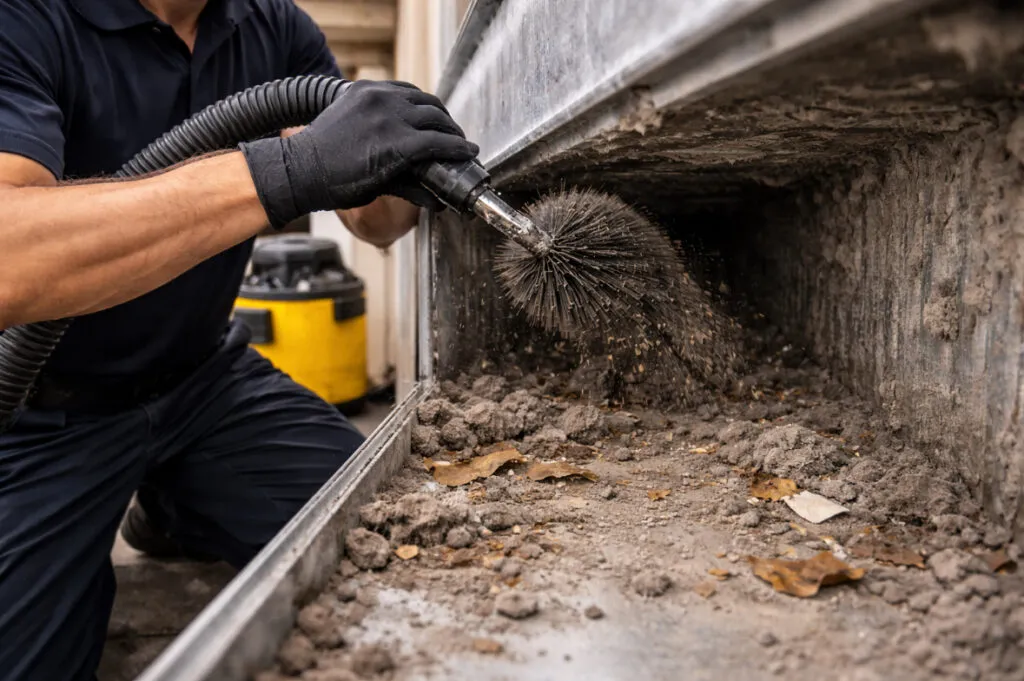
- Coil Debris Buildup: Moss, cottonwood, and leaves mat the outdoor condenser coil over winter, cutting heat rejection efficiency.
- Capacitor Decline: Cold storage accelerates wear; a failed capacitor costs $150 to $300 versus $50 to $80 caught during a checkup.
- Refrigerant Loss: Small leaks from last season keep losing charge all winter, leaving the system undercharged by spring.
- Drain Line Blockage: Standing moisture lets algae form inside drain lines, causing water backup when dehumidification resumes in spring.
- Electrical Corrosion: Portland’s damp air oxidizes connections inside the air handler, causing intermittent faults under cooling load.
Catching these in March or April costs a fraction of what emergency repairs run during a May heat event when service queues stretch for days.
Simple Things Portland Homeowners Can Check Before the First Heat Spike

Not every spring AC issue requires immediate repair, and there are a few things homeowners can safely check before scheduling service. In many Portland homes, simple maintenance oversights like clogged filters or blocked outdoor coils create airflow and efficiency problems that become much more noticeable during the first warm week of May.
These quick checks help your system start the season under less strain and may even prevent unnecessary service calls.
| DIY Check | Why It Matters |
|---|---|
| Replace the air filter | Restricted airflow can reduce cooling performance and increase blower strain |
| Clear outdoor debris | Leaves, moss, and cottonwood block condenser airflow and trap heat |
| Test the thermostat | Weak batteries or incorrect settings can prevent normal cooling operation |
| Check supply vents | Closed or blocked vents reduce airflow balance throughout the home |
| Listen during startup | Grinding, buzzing, or rattling sounds often signal developing component issues |
| Inspect around indoor unit | Water stains or moisture near the air handler may indicate drain problems |
If the system still struggles after these basic checks, the issue usually requires professional testing of airflow, refrigerant performance, electrical components, or duct conditions. Catching those problems before Portland’s first major heat spike is far easier than dealing with an emergency breakdown during peak summer demand.
Warning Signs Your AC May Not Be Ready for Summer
Some systems signal problems clearly before full failure. Catching these signs in spring, before temperatures spike, separates a scheduled service call from an emergency one.
A healthy system may show one of these signs after a long idle winter. A system with real problems tends to show three or more simultaneously the first time you turn it on during an early warm day.
| Warning Sign | What It Likely Means | Urgency |
|---|---|---|
| Warm or barely cool air from vents | Low refrigerant or dirty evaporator coil | High — service before hot weather |
| Weak airflow at registers | Clogged filter, blocked return, or blower issue | High — strains motor and cuts output |
| Grinding or rattling on startup | Failing capacitor, loose mount, or blower debris | High — can escalate to full failure |
| Water pooling near indoor unit | Blocked condensate drain or frozen evaporator coil | Medium-High — causes water damage |
| System short-cycling on and off | Refrigerant issue, electrical fault, or sizing problem | Medium — reduces efficiency and comfort |
| Higher energy bills than last summer | Dirty coils, aging compressor, or low refrigerant | Medium — worsens throughout the season |
If your system showed any of these last summer or is showing them now on early warm days, scheduling AC maintenance in Portland, OR before peak season is significantly less expensive than addressing the same issue in July.
Why Older Portland Homes Face Bigger Pre-Season Challenges
Portland has one of the highest concentrations of pre-1970 homes on the West Coast, most of which were never designed with central air conditioning in mind. Ductwork added later is often undersized, poorly insulated, and routed through attic spaces where temperatures exceed 130°F on hot afternoons. These homes don’t just run older equipment. They run it through a distribution system that was retrofitted, not purpose-built.
Here is what specifically puts older Portland homes at a disadvantage heading into cooling season:
- Uninsulated attic duct runs can reach 130°F on hot afternoons, heating supply air before it reaches the register and cutting delivered cooling significantly.
- Pre-1970 homes often rely on a single central return register, creating pressure imbalances that leave upstairs bedrooms significantly warmer than the rest of the house.
- Older single-stage AC systems run at 100% capacity or not at all, making humidity control difficult on mild Portland spring days when partial cooling is what the home actually needs.
- Homes with original single-pane windows place a much higher heat load on the AC, making a correctly-sized system behave as though it is undersized on the hottest afternoons.
- Corroded cast iron supply registers gradually reduce airflow volume to individual rooms with no obvious visual warning to the homeowner over time.
Understanding these structural realities sets realistic expectations for what pre-season maintenance can fix versus what may need a longer conversation about duct improvements or system capacity.
What a Professional Spring AC Checkup Actually Covers

A pre-season inspection is not a basic visual check and a filter swap. A qualified technician works through a structured set of measurements, cleanings, and component tests that confirm the system is mechanically ready for real summer load conditions in Portland.
A properly cleaned condenser coil alone can restore 10 to 15% of lost cooling efficiency, and a refrigerant charge confirmed against manufacturer pressure specs means the system delivers its rated cooling capacity rather than a diminished fraction of it.
What a complete spring AC service includes:
- Condenser Coil Cleaning: Inside-out wash removes winter debris and can restore 10 to 15% of lost cooling efficiency.
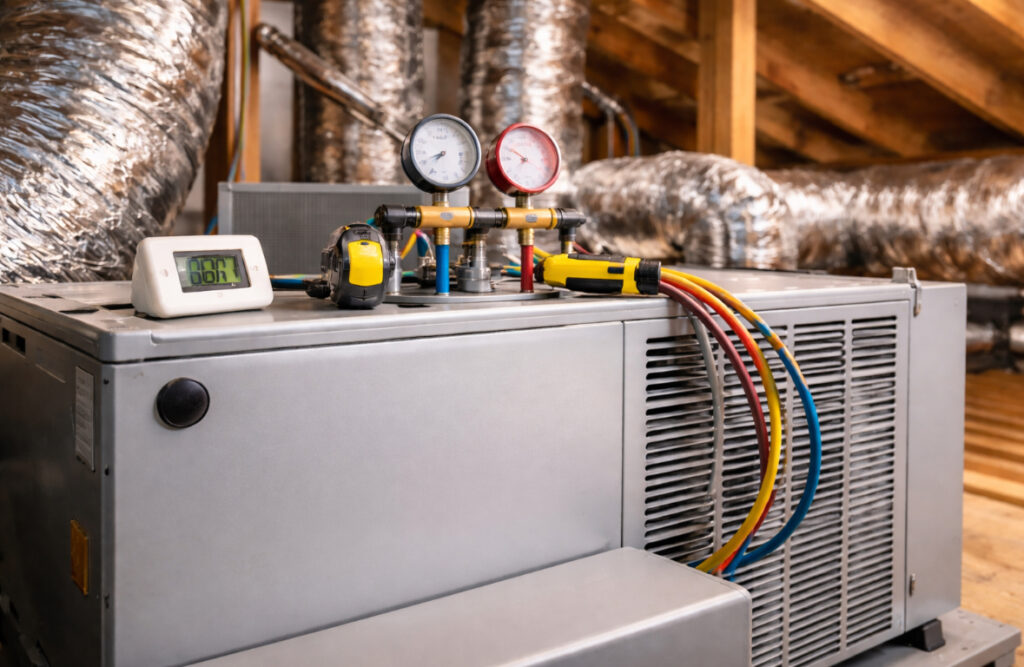
- Refrigerant Pressure Check: Pressures verified against spec; a system 10% undercharged loses up to 20% of cooling capacity.
- Capacitor and Contactor Testing: Capacitors tested against rated microfarad values; contactors checked for pitting before failure.
- Condensate Drain Flush: Drain line cleared and flow-tested to prevent water backup when spring dehumidification begins.
- Airflow Measurement: Supply airflow measured at registers to confirm the duct system delivers its designed output volume.
- Filter and Coil Inspection: MERV rating confirmed for the system; evaporator coil checked for frost patterns or debris accumulation.
A system that passes all of these checks going into May is genuinely ready for Portland’s first heat spike, not just assumed to be based on last August’s performance.
What to Expect During a Professional Spring AC Service
A professional pre-season service follows a clear sequence so you know exactly what is happening at each stage. Understanding the process takes the uncertainty out of scheduling and helps you recognize the value of what a thorough visit actually covers.
System Review and Conversation
Your technician starts by asking about the system’s history, any issues from last season, and your home’s cooling performance over the past year. This five-to-ten minute conversation helps direct the inspection toward the areas most likely to reveal problems given the equipment’s age and your specific home layout.
Outdoor Unit Service
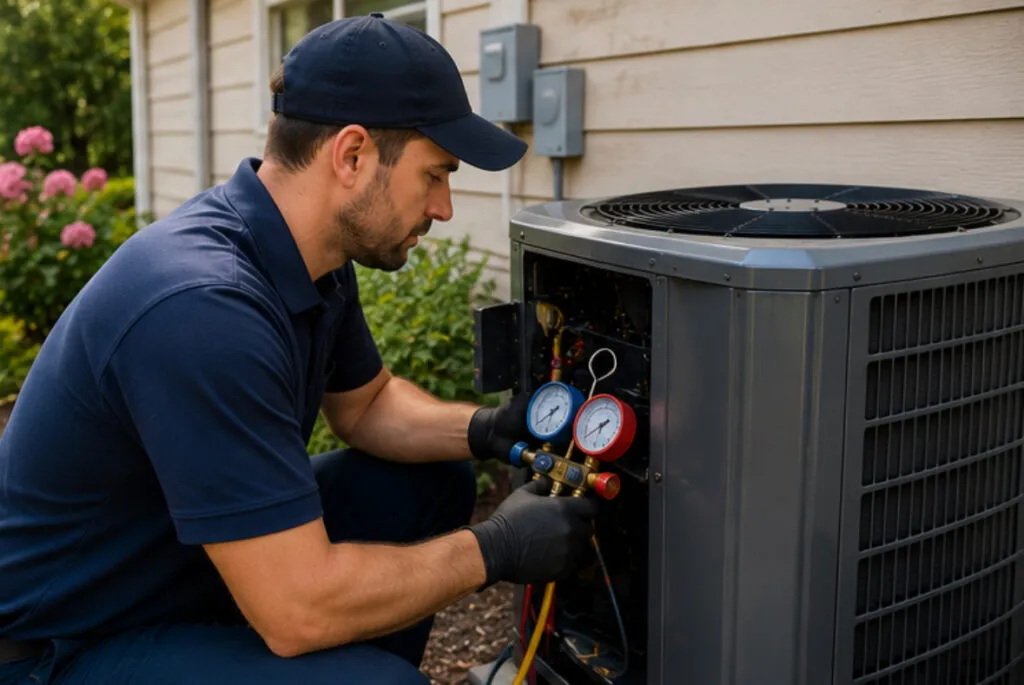
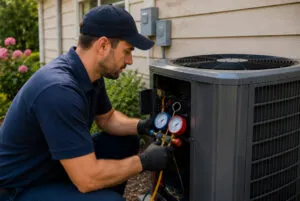
The condenser coil is cleaned, fan motor amp draw is tested, and the electrical disconnect and contactor are inspected and tested for signs of wear. Refrigerant pressures are measured after 10 to 15 minutes of operation from a cold start, giving accurate readings that reflect real operating conditions rather than startup variations.
Indoor Unit and Airflow Checks
The air handler cabinet is opened, the evaporator coil and blower wheel are inspected, and the condensate drain is flushed and flow-tested. Static pressure is measured to confirm the duct system is moving the airflow volume the equipment was sized and installed to deliver throughout the home.
Findings Walkthrough
Before leaving, your technician explains what was found, what was serviced, and what needs follow-up. You get honest recommendations without upsell pressure and a clear picture of your system’s condition heading into Portland’s cooling season.
Choosing the right HVAC contractor matters as much as scheduling the service itself. A detailed spring inspection helps prevent mid-season breakdowns, improves efficiency, and gives homeowners confidence their system is prepared for the months ahead.
Why Choose Forest Fresh for AC Maintenance in Portland, OR

Portland winters are long, wet, and hard on idle AC equipment. The shift to summer heat happens faster than most homeowners expect, and when the first heat spike arrives, there is no time to find out the system was not ready. Getting a step ahead of that is exactly what a pre-season AC service in Portland is built to deliver.
At Forest Fresh, our certified HVAC technicians bring years of hands-on experience servicing Portland homes through every season. We use eco-friendly cleaning products on every coil and drain service, follow a documented service checklist on every visit, and give you an honest assessment of what we find before recommending anything additional.
If your AC hasn’t been serviced since last summer, now is the right time. Reach out to Forest Fresh before the May heat arrives and before the service calendar fills.